G.W Tractors has a huge range of aftermarket Ford tractor parts in its warehouses in Melbourne and Brisbane and if we don’t have it in stock, we’ll find it for you, fast.
We’ve been importing replacement parts for Ford tractors, direct from aftermarket manufacturers for the last 30 years and pride ourselves on the quality of our parts.

Get your parts directly from the importer – give us a call on 1800 062 790 and our parts people will get your aftermarket Ford tractor parts delivered in no time.
Aftermarket Tractor Parts for all Ford models

Dexta, E27N, Major, Power Major, Super Dexta, Super Major

2110, 2310, 2610, 2810, 2910, 3110, 3310, 3610, 3910, 4110, 4410, 4610, 5110, 5610, 6410, 6610, 6710, 6810, 7010, 7410, 7610, 7710, 78110, 7910, 8010, 8210

3430, 3930, 4130, 4630, 4830, 5030, 5730, 8430, 8530, 8560, 8630, 8730, 8830

4635, 4835, 5635, 6635, 7635

5640, 6640, 7740, 7840, 8240, 8340

8160, 8260, 8360, 8560

2100, 2600, 3100, 3600, 3900, 4100, 4600, 5100, 5200, 5600, 5700, 5900, 6600, 6660, 6700, 7100, 7200, 7600, 7700, 8100, 8200, 8600, 8700
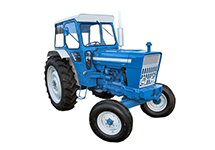
2000, 3000, 4000, 5000, 6000, 7000, 8000

1000, 1320, 1500, 1600, 1520, 1530, 1620, 1700, 1710, 1725, 1900, 1910, 1920, 2120, 3415, 1715, 1720, 1925, 2110

2N, 8N, 9N

TW5, TW10, TW15, TW20, TW25, TW30, TW35
Parts categories



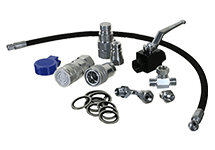


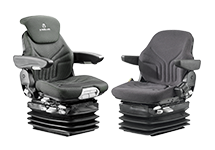


Used Ford Machinery and Parts
G.W. Tractors are constantly buying and selling used Ford tractors and often wrecking them for parts. Below are what we have in our yards at the moment. Give us a call at 1800 062 790 if you can’t find what you need.
Accessories, consumables & more
G.W. Tractors also has a huge range of accessories and consumables for all makes and models of tractors. Everything you need to keep your tractor working.
Contact us for Ford replacement parts
The Ford story
Although Henry Ford’s first car manufacturing company was established in 1901, he was not in the tractor business until 1907, when he finished his first experimental tractor. During this time, about 600 gasoline-powered tractors were already being used in the US. However, these machines were too big, too heavy, and too expensive for small family farms. Because of this, many people converted their automobiles (most of which were Ford Model Ts) into homemade tractors.
In 1915, Ford personally introduced a prototype known as the Model B tractor at a plowing demonstration in Nebraska. Aside from being much smaller than the tractors being sold at that time, the Model B was also cheap to operate because its four-cylinder, 20-hp engine ran on kerosene. And like the Ford Model T, it was designed for mass production at a low cost. Ford then established Henry Ford and Son in 1917, which exclusively manufactured tractors (branded as Fordson) as a separate company.
As World War I was raging in Europe, the UK was in need of tractors to expand its agriculture enough to feed its people. So in 1917, The British Ministry of Munitions chose Fordson tractors for importation from the US and domestic productions in the UK. Ford thus decided to build the tractors in Cork, Ireland (which was part of the UK at the time), as it was where his family emigrated from.
However two years later, the Irish War of Independence began. Because the tractor production in Cork did not flourish during this period, Ford ended production at the Ireland plant in 1922 and shipped its equipment back to the US the following year.
In 1928, Ford surprised the US market by ending production of Fordson tractors in the US. He then reopened the factory in Cork, Ireland, which became the sole production site of Fordson tractors.
Five years later, a new factory opened in Dagenham, England in 1933 and took over the tractor production from the Cork plant, which in turn focused on assembly.
Although 100% of Fordson tractors were produced in Ireland and then in England, Ford continued to experiment with new tractors in his US facilities. His prototypes included row-crop tricycle Fordsons, V8-powered tractors, and one-wheel-drive tractors, but none of them were introduced to the market. Instead, Ford waited until he found the right tractor to sell at the right time.
The right one came in the form of the Ford N-Series, which featured the Ferguson system–whose hitch is now called the three-point hitch or three-point linkage. The immediate success of the first model–the 9N–made its configuration the industry standard. The N-Series were produced until 1952.
In 1986, Ford expanded its tractor business by acquiring the Sperry-New Holland skid-steer loader and hay baler, hay tools, and implement company from Sperry Corporation. This acquisition resulted in the establishment of Ford-New Holland, which then bought out Versatile tractors in 1988. Five years later, Fiat acquired Ford-New Holland and changed its name to New Holland, which is now part of CNH Global.
